

Research Security
An AUKUS Perspective
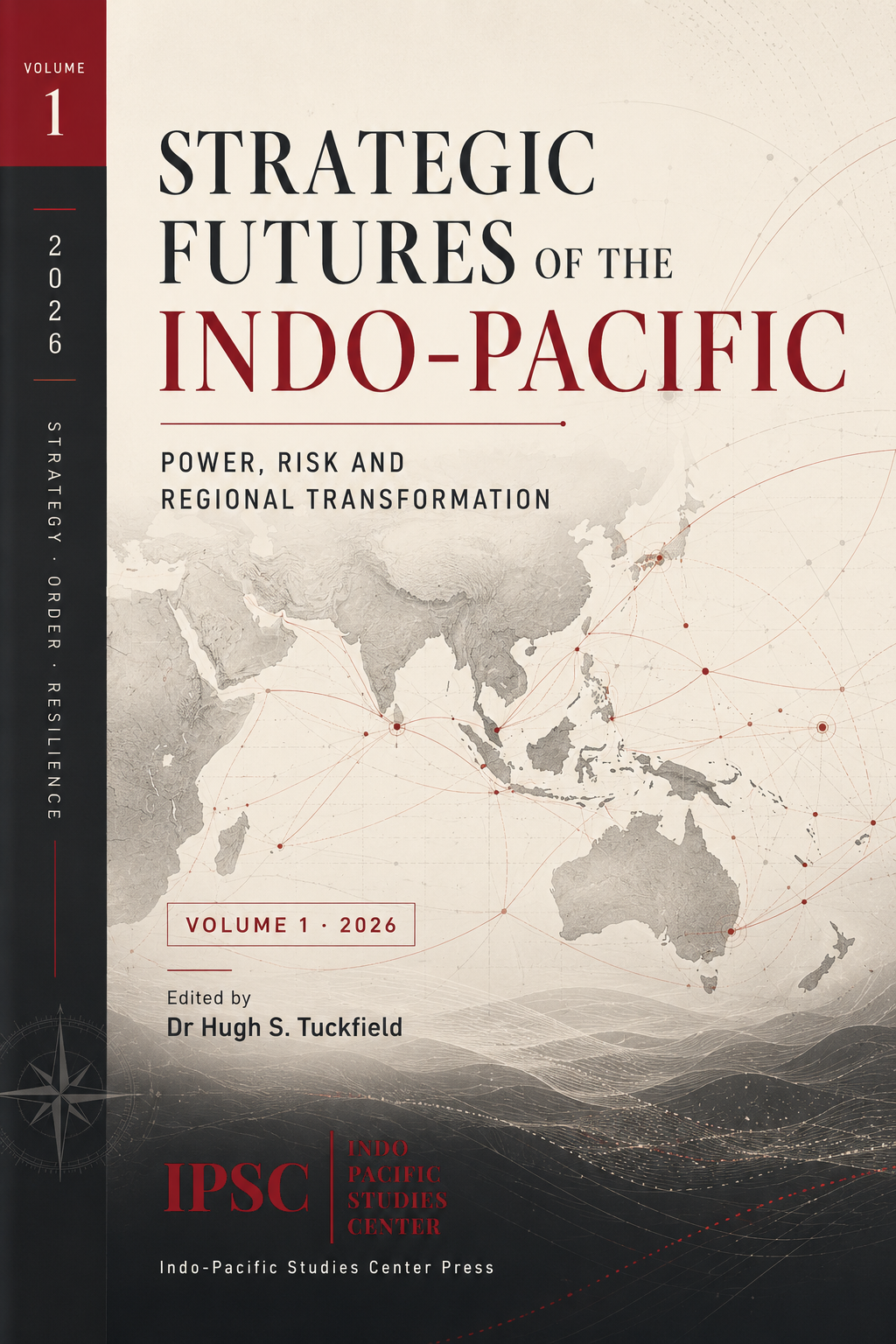
University research contributes significantly to the development of novel inventions and life-changing expertise, with universities set to take an increased role in receiving and holding crucial technologies under both Pillars of the AUKUS deal. However, given the contested geopolitical environment in the Indo-Pacific (constituted by other highly influential nations like China, North Korea, India and Japan), “research security” – the protection of university research from national security threats – is emerging as a highly challenging policy problem. Researchers want to collaborate internationally. Cooperation brings increased opportunities for funding and new insights, and for diversity of voice and thought. Our higher education sector can bridge diplomatic and foreign policy gaps that no other form of soft power can achieve. Yet, international collaboration has a dark side – it can open the door to espionage, foreign interference, illicit technology transfer and potential compromises to human rights, research integrity, or ethical and legal obligations. The AUKUS Agreement has exacerbated those risks, with intelligence agencies such as Australia’s Security Intelligence Organisation (ASIO) warning of an “unhealthy interest” in AUKUS technologies by autocratic governments. The US has signalled at least two potential challenges to AUKUS – a lack of submarine-building capability and insular research funding policies that have caused shocks worldwide. Other Indo-Pacific players are also shoring up their research security defences: New Zealand has a mature “trusted research” program, and Japan and South Korea are mobilising to protect their research from foreign competition and infiltration. This paper will briefly present research security measures in the AUKUS nations before proposing three lines of effort to contain threats to higher education research:
- Working between Australia, the US and the UK to create a common understanding of research security, under which to harmonise as much of their policy settings as possible;
- Leveraging the Five Eyes intelligence-sharing alliance to provide “sanitised” strategic intelligence to the higher education sectors of Indo-Pacific nations, countering the threats from autocratic interference in the region; and
- Incentivising and lowering the barriers for research opportunities between AUKUS universities and those in the Indo-Pacific, to drive strategic uplift in our Indo-Pacific partners capacity to handle research security risk (through capacity building, exchanges, investment etc).
Introduction
The announcement of the Australia-United Kingdom-United States (AUKUS) trilateral agreement in September 2021 – an agreement under which Australia would receive both nuclear-propelled submarines and other highly advanced military technologies like hypersonics, information warfare and robotics – took the world largely by surprise (Giannini, 2023). Indeed, no one was more surprised than the French government, who had been negotiating for some years with Australia to supply their Barracuda-class submarines (Doran, 2022). AUKUS also had significant ramifications for the geostrategy and foreign policy in the Indo-Pacific region. It represented Australia taking its place as a strategic link to contain aggressive expansion by China into the Pacific (Bisley, 2025; Rees, 2025), whilst also challenging stereotypical assumptions about Australia acting as a “middle power” in the eyes of the UK and US (Korolev, 2023; Taylor, 2025).
Those analyses of AUKUS on foreign affairs and international relations are well-represented in the literature. What is less well-explored, and what this article will focus upon, is the impacts of the AUKUS agreement on domestic science and technology research policy in Australia, the UK and US. Elsewhere, I argued that this is because AUKUS is a “poisoned chalice for the university and higher education research sector” (Walker-Munro, 2025a, p. 4), because AUKUS supplies Australian universities with advanced technologies which they are ill-equipped to protect. As I will demonstrate in this paper, whilst the UK and US have reasonably robust mechanisms to enable “research security”, Australia does not. And that lack of matured security approaches in higher education (where much of both the fundamental and applied research underpinning AUKUS will take place) means that of the three nations in the Agreement, Australia remains a strongly attractive target to foreign adversaries and their proxies seeking to gain access to the advanced technologies that AUKUS brings (Burgess, 2025).
Research security in the AUKUS nations
Threats to higher education research manifest from a variety of sources. China currently leads the world in numerous emerging technologies (Wong-Leung et al., 2025), many of which has been supplemented by whole-of-society espionage campaigns. These industrial-scale campaigns encourage expatriates and members of the Chinese diaspora (including scholars and students) to return information and technical data to the government (Eftimiades, 2019; Eftimiades, 2025). Russia has likewise returned as an active collector of foreign intelligence, with both military and civilian agencies stealing research data for the benefit of the motherland (Hosaka, 2025). North Korea is generally prevented by United Nations sanctions from sending its scholars and students abroad; instead, it leverages an exponentially talented and motivated army of hackers trained by intelligence officers permanently stationed at campuses such as Moranbong University and Mirim College (Sang-Hun & Yaffe-Bellany, 2022).
One obvious solution for research security is to simply ban collaborations with foreign nations that pose a security risk (Greene, 2024). Yet such arbitrary, nationalistic responses such as these risk the creation of what Wagner and Gåsemyr (2025) call the “stockyard paradox”, so named because it compares some research security measures to confining cattle to a stockyard to prevent theft: “[t]he immediate benefit is visible: no cattle are stolen. However, the confined animals develop weakened immunity, poor nutrition, and stress-related illness. The protection gradually undermines what it seeks to protect, creating a different kind of vulnerability” (p. 1).
For the AUKUS nations, this stockyard paradox looms large. The US and the UK are two of the so-called “Big 5” of international collaborators in science and technological research, alongside China, Germany and Japan (Cheung et al. 2022). Yet neither the UK nor the US can comprehensively ban collaborations in academia with nations like China without impeding their own progress in cutting-edge technologies (MITRE, 2019; Dao et al., 2024). Australia will also be implicated in the ramifications of hastily erected research security measures like nationality bans: almost two-thirds of the research papers published between 2021-2024 by Australian academics included at least one foreign author, with the majority of those based in China (Laurenceson, 2024). Australia also faces the unfortunate prospect of being far more economically dependent on China than either the US or UK, such that interruptions in the flow of trade (Edmonstone, 2024), tourism (Medcalf, 2019; Korolev, 2023) or international student income (McCowage et al., 2025) can be devastating to the Australian economy and subsequently influence foreign policy.
So, it would seem the approaches taken by the AUKUS nations to protect their higher education research would be especially of interest, given that research-intensive universities in all three countries routinely work collaboratively and openly with numerous foreign nationals, publish their results to the world, and benefit from nationally-supplied sources of funding to do both.
United States
The US has had a strong and robust approach to research security since JASON (the US’ science and technology advisory group) was commissioned to report on the subject (MITRE, 2019) by the National Science Foundation (NSF). That report found that whilst the US needed access to “foreign scientific talent” that could be impacted negatively by restrictions on fundamental research, that an agreed-upon and more comprehensive definition of research security was necessary to “protect U.S. interests in fundamental research while maintaining openness and successfully competing in the global marketplace for science talent” (p. 2). That definition arrived in the form of National Security Presidential Memorandum No. 33 (NSPM-33), which obligated Federal agencies to “enhance awareness of research security risks and protections” (Trump, 2021). One year later, the Biden (2022) administration published implementation guidance for NSPM-33 which outlined specific policy guidance on how research security protections ought to be enacted.
Collectively, US research security protections under NSPM-33 involved a mixture of both law- and policy-imposed obligations on Federal agencies that administer funding to or support universities and researchers (i.e., NSF, Department of Education, Department of Homeland Security). These obligations (Trump, 2021; Biden, 2022) require researchers to disclose of associations, appointments or affiliations (whether paid or unpaid) with foreign entities such as universities, research organisations and think tanks, and also to be identified by a unique Digital Persistent Identifier (DPI) to track applications for funding, disclosures and other activity across the US research ecosystem. Research institutions are required to run standardized training programs on research security as a condition of Federal funding (Crandall, 2023).
Failure to abide by obligations set down in US research security documentation is extremely serious. Not only can funders suspend or terminate funding arrangements for cause, but they can also withhold future funding or institute debarment proceedings (in which a researcher or institution would be prohibited from receiving or applying for Federal funding). The US False Claims Act permits multi-million-dollar penalties to be levelled on false disclosures in grant applications, which can also include “bounties” paid to the party who alerted authorities to the misconduct (Fong et al. 2020). And as the case of former Harvard Professor Charles Lieber demonstrated, lying about affiliations with foreign nations has resulted in criminal convictions (Department of Justice, 2023).
Indeed, Lieber’s case – alongside numerous others and the growing dissatisfaction with China’s use of US-made semiconductors – served as stimuli for the US government to further enhance research security protections with the CHIPS and Science Act. That legislation banned the export of advanced semiconductors to China and dedicated US$280 billion to domestic chip manufacture but also provided significant funding and expanded measures for US research security (Qureshi, 2023). The NSF was obligated to establish a Research Security and Policy office, develop a plan for “due diligence screening” for access to controlled laboratories, and prohibit or suspend funding to any person or institution associated with named foreign entities of concern, Confucious Institutes, or participating in any “malign foreign talent recruitment program” (Crandall, 2023). The NSF also provided funding to establish the “Safeguarding the Entire Community of the U.S. Research Ecosystem” (SECURE) Centre in collaboration with the University of Washington and Texas A&M University (NSF, 2024).
Other obligations under US law and policy also touch on research security. For example, the Committee for Foreign Investment in the United States (CFIUS) acts as the delegate of the President and is vested with power to examine, and if necessary block, foreign investment in inter alia US universities and research programs (Walker-Munro, 2024). US export control laws can also implicate academics by prohibiting them from sharing information, technical data or results for technologies covered by comprehensive control lists (Evans & Valdivia, 2012). Under US law emailing, telephoning or even discussing such information with a foreign national will count as a “deemed export” requiring a permit (Daniels & Krige, 2022).
Of course, not all the US research security protections have been accepted by the institutions which they seek to govern. The conduct of “fundamental research” – research in science and engineering which is intended to be shared publicly, such as in peer-reviewed journal articles – is usually exempt from US export control law unless its authors accept restrictions on publication for reasons of national security (such as under the National Security Decision Directive No 189 or NSDD-189 ). However, the precise parameters of NSDD-189 in the face of hardened research security measures have led to frustration, debate, argument, and even spirited defiance of classification regimes by researchers (Daniels & Krige, 2022; Crandall, 2023). Further, much of academia would be triggered by the so-called “China Initiative”, a joint FBI-Department of Justice taskforce launched in 2018 to target economic espionage. Unfortunately, a series of high-profile botched prosecutions led to allegations of racial profiling and a suggestion that the program was criminalising “researching whilst Chinese” (Lewis, 2021).
United Kingdom
The UK occupies a slightly different realm in both geopolitics and interactions in the Indo-Pacific, having no immediate physical boundary to the region yet still holding a security interest in its development. At the same time, the UK has adopted a significant raft of research security measures to protect investments and expenditures in its university research ecosystems that will be both implicated by, and shaped during, the technological exchanges anticipated by AUKUS.
Spurred on by developments in the US and neighbouring European Union, both UK Research & Innovation (UKRI, 2019) and the National Protective Security Authority (2019) published guidelines on “trusted research”, which aimed at “protecting the UK’s intellectual property, sensitive research, people and infrastructure from potential theft, manipulation and exploitation, including as a result of interference by hostile actors” (p. 2). Those policy positions were soon buttressed by legislation in the form of the UK National Security and Investment Act in 2021, which established a scheme like the CFIUS and enabled the UK Home Secretary to “call-in” foreign investments, especially at universities (where almost 50% of “call-ins” have occurred: Walker-Munro, 2024). Then, very shortly after those changes were made, UK universities were encouraged at both national and institutional levels to engage in “de-risking”, i.e., the mitigation or removal of security risks from associations with international students and scholars which were critical to the UK university sector (Adams et al. 2023; Liu et al. 2025). The UK also enacted a single point-of-entry for academics and research institutions to obtain tailored and targeted advice regarding research security via its Research Collaborative Advice Team (RCAT: Shih et al., 2025). Since 2022, RCAT has provided advice on national security risks related to international collaboration, provided education and outreach on the UKRI principles of trusted research, and advised the sector more broadly about threats and intelligence.
Much like the situation in the US, there are also other formidable research security measures located in other domains of regulation. Points of access to academia are quite comprehensively protected via the Academic Technology Approval Scheme (ATAS) in the UK’s Migration Rules. The ATAS obligates visiting scholars and students applying for a visa to study or work on anything which could advance military technology or weapons of mass destruction to also be screened by the UK’s Counter-Proliferation and Arms Control Centre prior to commencing (Tauwhare, 2015; Gov.UK, 2025). Simultaneously, with the passage of the UK’s National Security Act 2023, foreign entities which perform a “relevant activity” (including academic research, collaboration or knowledge transfer, or academics giving evidence to a Minister, government department, or Parliamentary hearing) must report themselves and be placed on a public register (Home Office, 2025). One such organisation, the China Scholarship Council, has already come under scrutiny in this new regime for requiring “guarantors” to face potential penalties if the recipient breaches Chinese law, and the obligation for “ideological training” to be given to successful recipients (UK-China Transparency, 2025).
At the same time, protection of academic freedom in the UK in the context of research security has recently been elevated to the national agenda. In November 2025, Sheffield Hallam University was embroiled in allegations that they had suppressed research into the human rights of Uyghur Muslims under pressure from the Chinese government (Grammaticas, 2025). At least on face value, such allegations could trigger breaches of the UK’s Higher Education (Freedom of Speech) Act 2023, had that Act not been “paused” by the Government because of outcry in the higher education sector about the imposition of new obligations (Department of Education, 2025). Indeed, this kind of transnational repression is not new to the UK higher education environment, but simply the latest battle in a long-running war to influence the conduct of what is deemed “acceptable” research in UK institutions (Joint Committee on Human Rights, 2025; UK-China Transparency, 2025).
The UK offers one more valuable observation relevant to research security, and especially in the context of the technology transfers pending under the AUKUS Agreement. Recently the UK government published its National Security Strategy, outlining “the main challenges the UK faces in an era of radical uncertainty and sets out a new Strategic Framework covering all aspects of national security and international policy” (Cabinet Office, 2025). Contained within the UK National Security Strategy was a direct reference to the implications of research security, with the UK government committing to “the publication of the UK’s first Research Security Strategy, which will set out the government’s domestic and international policy on research security” (Cabinet Office, 2025, p. 49). No other global government has so comprehensively considered the prospect of research security at the level of domestic policy, so the contents of that Strategy will have significant implications for the future of the AUKUS Agreement.
Australia
The approach of the Australian government to research security has been largely couched in terms of its broader policy focus on “countering foreign interference”, which itself is “central to the Australian government’s broader policy of ‘pushback’ against China’s geostrategic advancements in East Asia and beyond” (Shih et al., 2024, p. 311). Those advancements by China have included acts of transnational repression, human and cyber-espionage, and undermining legitimate research partnerships to develop military or intelligence technologies (Riordan & Callick, 2017; Human Rights Watch, 2021; Parliament of Australia, 2022; Walker-Munro et al., 2023; Vaughan & Gorokhovskaia, 2025). Given its position in “a geopolitical hotbed in the Indo-Pacific region” (Shih et al., 2024, p. 310), Australia potentially faces threats from other countries such as India (whose High Commission infamously interfered in the publications of a university-run think tank: Manuel, 2022) and Russia (who attempted to coerce an academic into supporting an application for a security clearance: Bita, 2024).
Surprisingly, Australia does not couch the protection of its higher education sector in terms of research security, an approach Shih et al. (2024) identified has having “less explicit” (p. 311) linkages into naming its geopolitical concerns and quite unlike the UK or US. Equally, Australia does not adopt “lists” which name entities with whom universities or academics cannot collaborate; perhaps again, this belies the Australian government’s intention is to deploy measures that are “less politically sensitive than trade negotiations, and less confrontational than security issues” (Xiao, 2025). Such an intention seems somewhat understandable, given that much like the UK and US, a substantial proportion of Australia’s investment in higher education relies on foreign students through its universities (You, 2024), coupled with a dangerously unique Australian reliance on foreign countries like China to underwrite national science and technology research (Joske, 2018; Hamilton, 2018; Parliament of Australia, 2022; Priyandita & Hogeveen, 2025).
On the positive side of the research security balance, Australia has a healthy set of national security laws which have established multiple requirements to publicly register entities acting on behalf of “foreign principals” (i.e., foreign governments, their agencies, government-owned corporations and the like) as well as “foreign arrangements” (i.e., contracts or memoranda of understanding) between entities located in Australia and those outside her borders. Australia has also adopted a migration control like the UK ATAS when it enacted the Protecting Australia’s Critical Technology Regulations (Department of Home Affairs, 2025), and which obligates foreign students and scholars to undergo increased visa screening measures. Australia also established the Universities Foreign Interference Taskforce (UFIT), and promulgated policy guidelines in 2019 and again in 2021 to assist universities in discharging their obligations to counter foreign interference (Shih et al., 2024).
Unfortunately, what seems to be challenging for the Australian experience – and thus directly threatening the execution of the AUKUS Agreement – is the actual implementation of these measures. For example, mere registration on a public website does not appear to discourage universities or researchers from partaking in high-risk associations. A study in 2023 showed that Australian universities had executed nearly 3,800 agreements with entities located in China, with half of those entities alleged to pose serious risks to national security (Walker-Munro et al. 2023). Universities also appear either unable or unwilling to resist the lucrative financial incentives to train research students (Walker, 2024), the next generation of the professoriate (King, 2025), or campuses in high-risk countries (Ross, 2025). Further – and unlike the US’ NSPM-33 – Australia’s UFIT Guidelines are not mandatory and have little application in funding decisions (Walker-Munro, 2025b).
Simultaneously, both the Foreign Arrangements Scheme Register and the Foreign Influence Transparency Scheme Register have both been recently reviewed. In the case of the Foreign Influence Transparency Scheme Register, Parliament (2024) said “as currently constructed the FITS Act is largely ineffective…it would be difficult to justify the ongoing compliance burden and resources without major reform if it is to achieve its key objective” (p. 76). In the case of the Foreign Arrangement Scheme, the reviewer found that Australia lacked formalised governance over the nation’s resilience measures (Huxtable, 2025, p. 96) and a central point of support for universities seeking to assess their risk (p. 99). Likewise, the export control landscape of Australia lacks a strong regulatory presence, having not prosecuted anyone for offences against export controls since the laws were enacted in 2012 (Tesch & Samuel, 2024).
Almost all of the fundamental research in AUKUS technologies (and even some of the applied research) will be done in universities (Group of Eight Australia, 2024). Given the focus of both Pillar 1 and 2 of AUKUS are to enable Australia access to highly advanced (but also highly sensitive) military technologies, it seems foolhardy that they would not take robust steps protect those technologies from theft or diversion. As one example, an Australian academic has estimated that to deliver the nuclear-propelled submarine capability anticipated by AUKUS Pillar 1 would require 200 doctoral-qualified candidates in nuclear physics and 4000 technical engineers with experience in nuclear engineering – a pipeline of human talent that Australia simply does not have (Obbard, 2023).
On the other hand, Australia occupies a unique position in the Indo-Pacific, both economically and geopolitically. It cannot afford to upset either China or the US, and so must tread a careful middle ground between both (Bisley, 2025; Taylor, 2025). Unfortunately, it appears that Australia’s higher education research ecosystem seems to be paying the price for such middle-of-the-road politics, operating in a policy blackspot that could easily be addressed by a cohesive national and international policy focus for dealing with research security as a geopolitical issue. Thus, AUKUS represents something of a “poisoned chalice” to Australian defence. Yes, once the technologies are delivered, they represent a substantial force multiplier for Australia’s military; however, that force multiplier is completely annulled if another country uses Australian academia to steal the technologies before we can implement them.
How the AUKUS nations should approach research security
The necessities of AUKUS research will inevitably attract foreign nations from outside the AUKUS Agreement; indeed, the Director-General of ASIO Mike Burgess (2025) has already warned of “foreign intelligence services taking a very unhealthy interest in AUKUS and its associated capabilities”. As strategic competition hardens, universities in the AUKUS nations will be forced to balance wanting to further the acquisition and accumulation of knowledge with protecting that same knowledge from subversion and theft. So, in that environment, what should the AUKUS nations be doing to uplift Australian research security but also the security of all three nations? After all, it does little to advance the argument of “protecting” one’s academic research ecosystem if one of the AUKUS partners is not pulling their weight accordingly.
Much of that work falls to Australia, as the predominant beneficiary of the AUKUS Agreement. Not only will the technologies of AUKUS deliver substantial strategic military capabilities which Australia does not currently possess (but the UK and US do), Australian researchers and their institutions are likely to receive indirect benefits from substantial increases in funding to perform the necessary research. Likewise, the Australian government stands to benefit more significantly in its capacity to posture internationally, perhaps finally achieving the “push back” on China that it has been seeking for the last several years (Korolev, 2023; Taylor, 2025; Bisley, 2025). However, that also means that Australia also has the most work to do to deliver on a comprehensive and cohesive piece of legislative and policy tone-setting for its higher education sector. How should it do this?
Firstly, Australia needs to take the leadership position in policy development and work with its AUKUS partners in the UK and US for all three to develop a nationally consistent research security policy framework. That framework needs – as much as possible, noting the differences in Australian, UK and US higher education environments – to be harmonised across as many of the domains listed in Box 1 (Walker-Munro, 2025a, p. 9) below:
| Box 1: Key threat behaviours in research security, and what they target | |
|---|---|
| Technological and scientific research | Intellectual property theft Espionage “Non-traditional collection”, i.e., use of expatriates to collect intelligence. Foreign talent recruitment programs |
| Digital assets (personal information, research data) | Cyber-espionage Ransomware Data theft (incl. sales on the dark web) |
| Sanctions / export control evasion | Providing access to restricted technologies “Man-in-the-middle” supplies, i.e., countries supplying restricted tech to China, Russia, Iran, North Korea, etc. |
| Integrity of university research | Suppressing or altering research results or outcomes (foreign interference) “Buying” research and intellectual property through funding Mis-/dis-information |
| Human intelligence (aka access to university “know-how”) | Access to persons in university authority Support to get security clearances / positions |
Some of this work has already been done. For example, Australia and the UK undertook a significant piece of review work in aligning its export control laws with those of the US to enable licence-free exchanges of technology for AUKUS Pillar 1 (Sanders, 2024). Similar work packages for the other domains of research security are required, as are ones which would continue to enjoin the UK as well as a strategic partner.
Secondly, the AUKUS partners all belong to one of the most reliable and long-running intelligence sharing partnerships in the world: the Five Eyes (Kerbaj, 2025). There is nothing currently preventing the AUKUS partners from using the Five Eyes alliance to share intelligence on threats posed to their respective higher education sectors (and no doubt that is already occurring). What now needs to take place is the next logical step: bringing select staff of universities “inside the tent” with intelligence officials (Mannheim, 2018). Alternately, the Five Eyes could provide “sanitised” strategic intelligence to the higher education sectors of Indo-Pacific nations, in much the same way they did when shining a light on China’s industrial-scale espionage campaigns (Siddiqui, 2023). If either of those two notions are beyond the pale, there exists a vacuum for the AUKUS partners using the Agreement to act as “research security anchors” for the Indo-Pacific: demonstrating best practice and encouraging uplift across the region. The UK’s RCAT could even go transnational, creating a clearinghouse for declassified information on threats to the university research sector for the region. Looking to the private sector for an example, one could consider the structure of the Critical Infrastructure Information Sharing and Analysis Center (CI-ISAC, 2024), a not-for-profit collaborative entity “dedicated to improving global cybersecurity through the principles of equality and trusted information sharing”.
Thirdly, the AUKUS partners need to jointly consider research security as an Indo-Pacific endeavour and consider ways to uplift our regional partners as well as each other. This includes working closely with values-aligned nations like South Korea and Japan, who have already started making research security moves of their own (Kim et al., 2025; Manickam, 2025). Emplacing barriers like exorbitant international student fees or caps on the number of enrolments from our neighbours harms the collective’s ability to export “academic diplomacy” (Laakso, 2024) to nations in the region other than China, such as Malaysia, Indonesia, Vietnam, and those in the “Blue Pacific” such as the Solomon Islands, Fiji, Vanuatu and Papua New Guinea. That might require the AUKUS partners to also look beyond trivial amounts of funding available in the region (especially compared to that offered to and by China: Hare, 2024) and consider real and lasting investments in the region. At the same time, the AUKUS partners can encourage more principled and sensible academic engagement with China that undertakes more appropriate and in-depth standards of due diligence (Walker-Munro et al. 2023). The AUKUS partners need to take strong and robust steps that ensure that academic engagement with China benefits the partners of AUKUS, and not the other way around.
Examining AUKUS from the perspective of research security, it is hard to agree with the position that the Agreement is at an “inflection point” (Denmark & Edel, 2025). Instead, it seems that the US and UK were already positioned well upstream on protecting their higher education sectors and have been since 2019. Although Australia took some significant steps in its legislative reforms of the time (such as criminalising foreign interference, an example other nations are only now starting to follow), the nation is doggedly lagging its AUKUS partners in adopting research security as a national science and technology priority. That’s a huge issue, given the scale and cost of the technologies which the Agreement is said to be delivering. After all, none of the AUKUS partners want the diplomatic and foreign policy repercussions of allowing a nation with adversarial interests in the Indo-Pacific to have access to the closely guarded secrets of nuclear-powered submarines. Yet research security could have broader transnational and strategic implications if it used responsibly and maturely in the Indo-Pacific. Not only could AUKUS deliver benefits to the universities which host its research, but AUKUS as a security agreement could deliver a platform for a unified voice on safe and secure forms of collaboration in technological research in the region. Anything less, and AUKUS is likely to be nothing more than a cluster of “good intentions” (Davis, 2025).
References
Biden, President J. (2022, January). Guidance for Implementing National Security Presidential Memorandum 33 (NSPM-33) on National Security Strategy for United States Government-Supported Research and Development. https://bidenwhitehouse.archives.gov/wp-content/uploads/2022/01/010422-NSPM-33-Implementation-Guidance.pdf
Bisley, N. (2025). The Quad, AUKUS and Australian Security Mini-lateralism: China’s Rise and New Approaches to Security Cooperation. Journal of Contemporary China, 34(154), 564-576. https://doi.org/10.1080/10670564.2024.2365241.
Bita, N. (2024, September 25). Defence researcher in academic freedom fight at Australian National University. The Australian. https://www.theaustralian.com.au/education/defence-researcher-in-academic-freedom-fight-at-australian-national-university/news-story/3624e9929fe9086d2f8baba4b24c53e0.
Burgess, M. (2025). The 26th Annual Hawke Lecture: Counting and countering the cost of espionage. ASIO. https://www.asio.gov.au/26th-annual-hawke-lecture-counting-and-countering-cost-espionage.
Cabinet Office. (2025, June 24). National Security Strategy 2025: Security for the British People in a Dangerous World. https://www.gov.uk/government/publications/national-security-strategy-2025-security-for-the-british-people-in-a-dangerous-world.
Cheung, C., Armitage, C., Crew, B., & Maxwell, T. (2022). Tracking the collaborative networks of five leading science nations. Nature, 603(S10-S11). https://doi.org/10.1038/d41586-022-00571-z.
CI-ISAC. (2024). Who We Are. https://ci-isac.org/about-us/
Crandall, C. (2023). Protecting Federally-Funded Research and Development: A Primer on National Security Decision Directive 189 for Legal Practitioners. Jurimetrics Journal of Law, Science and Technology, 63(4), 325-355.
Daniels, M., & Krige, J. (2022). Knowledge regulation and national security in postwar America. University of Chicago Press.
Dao, T. K., Evans, K. M., Shannon, M. D., Bronk, C., Neuhauser, C., & Roberts, E. (2024). Responsible Collaboration Through Appropriate Research Security. Baker Institute for Public Policy. https://www.bakerinstitute.org/sites/default/files/2024-09/S%26T-Reseach%20on%20Research%20Security_FINAL-090524.pdf
Davis, M. (2025, August 27). If AUKUS Pillar Two isn’t focused, it may become just a pile of good intentions. The Strategist. https://www.aspistrategist.org.au/from-aspi-analysis-to-csis-alarm-refocusing-aukus-pillar-two/.
Denmark, A. M., & Edel, C. (2025). The AUKUS Inflection: Seizing the Opportunity to Deliver Deterrence. CSIS. https://www.csis.org/analysis/aukus-inflection-seizing-opportunity-deliver-deterrence.
Department of Education. (2025, June). The future of the Higher Education (Freedom of Speech) Act 2023. https://assets.publishing.service.gov.uk/media/ 68598549eaa6f6419fade676/the-future-of-the-higher-education-freedom-of-speech-act-2023-print-version.pdf.
Department of Home Affairs. (2025, July 1). Critical technology - enhanced visa screening measures. https://www.homeaffairs.gov.au/about-us/our-portfolios/national-security/technology-and-data-security/critical-technology.
Department of Justice. (2023, April 26). Former Harvard University Professor Sentenced for Lying About His Affiliation with Wuhan University of Technology; China’s Thousand Talents Program; and Filing False Tax Returns. https://www.justice.gov/usao-ma/pr/former-harvard-university-professor-sentenced-lying-about-his-affiliation-wuhan.
Doran, M. (2022, June 11). Australian government agrees to pay $835 million to French submarine contractor Naval Group over cancelled contract. ABC News. https://www.abc.net.au/news/2022-06-11/albanese-submarine-deal-with-france/101145042.
Edmonstone, G. (2024, April 2). China’s trade restrictions on Australian exports. United States Studies Centre. https://www.ussc.edu.au/chinas-trade-restrictions-on-australian-exports
Eftimiades, N. (2019). On the question of Chinese espionage. Brown Journal of World Affairs, 26(1), 125-142.
Eftimiades, N. (2025). Chinese Espionage Operations and Tactics. Vitruvian Press.
Evans, S. A., & Valdivia, W. D. (2012). Export controls and the tensions between academic freedom and national security. Minerva, 50(2), 169-190.
Fong, E. A., Wilhite, A. W., Hickman, C., & Lee, Y. (2020). The legal consequences of research misconduct: False investigators and grant proposals. The Journal of Law, Medicine & Ethics 48(2), 331-339.
Giannini, D. (2023, March 14). Timeline: How the AUKUS deal came together. Australian Financial Review. https://www.afr.com/policy/foreign-affairs/how-the-aukus-deal-came-together-20230314-p5cruk.
Gov.UK. (2025, December 19). Immigration Rules Appendix ATAS: Academic Technology Approval Scheme (ATAS). https://www.gov.uk/guidance/immigration-rules/immigration-rules-appendix-atas-academic-technology-approval-scheme-atas.
Grammaticas, D. (2025, November 3). China intimidated UK university to ditch human rights research, documents show. https://www.bbc.com/news/articles/cq50j5vwny6o.
Greene, A. Chinese academic visits banned at Canberra’s Australian Defence Force Academy. ABC News. https://www.abc.net.au/news/2024-08-21/adfa-bans-chinese-academic-visits/104247384.
Group of Eight Australia. (2024). Curated: Capability to support AUKUS Pillar II. https://go8.edu.au/wp-content/uploads/2024/06/GO8-AUKUS-Capability-Statement.pdf
Hamilton, C. (2018). Silent Invasion: China’s Influence in Australia. Hardie Grant Publishing.
Hare, J. (2024, August 27). “Reckless gamble” threatens $48b industry. Australian Financial Review. https://www.afr.com/politics/federal/reckless-gamble-threatens-48b-industry-20240826-p5k5i9
Home Office. (2025, April 25). Sector Specific Guidance on the Foreign Influence Registration Scheme (FIRS): Academia and Research Sector. https://assets.publishing.service.gov.uk/media/686f8c432557debd867cbf29/Sector_Specific_Guidance_Academia.pdf
Hosaka, S. (2025). The elephant in the lecture hall: Russian intelligence and Western academia. Studies in Higher Education, 1-19.
Human Rights Watch. (2021). “They Don’t Understand the Fear We Have”: How China’s Long Reach of Repression Undermines Academic Freedom at Australia’s Universities. https://www.hrw.org/report/2021/06/30/they-dont-understand-fear-we-have/how-chinas-long-reach-repression-undermines
Huxtable, R. (2025, February 16). Review of the Foreign Arrangements Scheme: Final Report. https://www.foreignarrangements.gov.au/sites/default/files/2025-09/report_of_the_review_of_the_foreign_arrangements_scheme_-_accessible_version.pdf
Joint Committee on Human Rights. (2025, July 30). Transnational repression in the UK. https://committees.parliament.uk/publications/49059/documents/257980/transnational-repression-uk-2025.pdf.
Joske, A. (2018). Picking flowers, making honey. Australian Strategic Policy Institute. https://www.aspi.org.au/report/picking-flowers-making-honey.
Kerbaj, R. (2025). The Secret History of the Five Eyes: The Untold Story of the International Spy Network. Union Square & Co.
Kim, H., Mobrand, E., & Schwaag Serger, S. (2025). National context and the security turn in international research collaboration: evidence from South Korea. Globalisation, Societies and Education, https://doi.org/10.1080/14767724.2025.2543317.
King, J. (2025, December 7). Top Australian university chief led “special zone” at Chinese military tech university. Daily Telegraph. https://www.dailytelegraph.com.au/news/national/top-australian-university-chief-led-special-zone-at-chinese-military-tech-university/news-story/e55ef9ae647e72ca1300a02da0b8ee24
Korolev, A. (2023) Transition from hedging to balancing in Australia’s China policy: theoretical and empirical explorations. Australian Journal of International Affairs, 77(5), 548-568. https://doi.org/10.1080/10357718.2023.2274446.
Laakso, L. (2024). Academic diplomacy. In T. Kivimäki (Ed.), Research Handbook on Conflict Prevention (pp. 48-63). Edward Elgar Publishing.
Laurenceson, J. (2024, February 16). Research espionage is a real threat – but a drastic crackdown could stifle vital international collaboration. The Conversation. https://theconversation.com/research-espionage-is-a-real-threat-but-a-drastic-crackdown-could-stifle-vital-international-collaboration-223555.
Lewis, M. K. (2021). Dismounting the “China Initiative” Tiger. Seton Hall Law Review, 52(4), 987-1002.
Liu, W., Løkke Jakobsen, M., Yu, C., Huang, C., Malinen, O. P., & Zhang, X. (2025). Knowledge Diplomacy in the De-Risking Context: What Does “De-Risking” Mean for EU-China Higher Education Collaboration? Journal of Studies in International Education, 29(2), 256-274. https://doi.org/10.1177/10283153251315259.
Manickam, M. (2025, December 16). MITI to tighten oversight of intangible technology transfers. The Sun. https://thesun.my/business/local-business/miti-to-tighten-oversight-of-intangible-technology-transfers/.
Mannheim, M. (2018, June 4). Does letting everyone inside the tent reduce the “insider threat”? Sydney Morning Herald. https://www.smh.com.au/politics/federal/does-letting-everyone-inside-the-tent-reduce-the-insider-threat-20180531-p4zin0.html
Manuel, C. (2022, April 6). Academics quit Melbourne University institute over foreign interference and free speech concerns. The Age. https://www.theage.com.au/national/victoria/academics-quit-melbourne-university-institute-over-foreign-interference-and-free-speech-concerns-20220406-p5ab8x.html.
Medcalf, R. (2019). Australia and China: Understanding the reality check. Australian Journal of International Affairs, 73(2), 109-118.
MITRE Corporation. (2019). Fundamental Research Security. https://www.mitre.org/sites/default/files/2021-11/JASON-Fundamental-Research-Security-Dec-2019.pdf
National Protective Security Authority. (2019). The cyber threat to universities. https://www.ncsc.gov.uk/report/the-cyber-threat-to-universities
NSDD. (1982, September 21). NSDD-189, White House 1985 Directive on Fundamental Research Exemption. https://www.aau.edu/key-issues/nsdd-189-white-house-1985-directive-fundamental-research-exemption.
NSF. (2024, July 24). NSF-backed SECURE Center will support research security, international collaboration. https://www.nsf.gov/news/nsf-backed-secure-center-will-support-research.
Obbard, E. (2023, March 31). Three tiers and more than 8000 new engineers: what it will take to deliver AUKUS nuclear submarine program. UNSW Newsroom. https://www.unsw.edu.au/newsroom/news/2023/03/three-tiers-and-more-than-8000-new-engineers--what-it-will-take-
Parliament of Australia. (2022). Inquiry into national security risks affecting the Australian higher education and research sector. https://www.aph.gov.au/Parliamentary_Business/ Committees/Joint/Intelligence_and_Security/~/link.aspx
Parliament of Australia. (2024). Review of the Foreign Influence Transparency Scheme Act 2018. https://www.aph.gov.au/Parliamentary_Business/Committees/Joint/ Intelligence_and_Security/Completed_Inquires_of_the_47th_Parliament/FITSAct2018/Report.
Priyandita, G., & Hogeveen, B. (2025). State-sponsored economic cyberespionage for commercial purposes. Australian Strategic Policy Institute. https://www.aspi.org.au/report/state-sponsored-economic-cyber-espionage-commercial-purposes-assessing-preparedness-emerging
Qureshi, A. H. (2023). The US Chips and Science Act of 2022: A Self-Interested Indulgence in Foreign Trade and Science or a Model for Future Development? Syracuse Journal of International Law & Commerce, 51(1), 89-118.
Rees, M. (2025). AUKUS as ontological security – Australian foreign policy in an age of uncertainty. Australian Journal of International Affairs, 79(1), 91-109. https://doi.org/10.1080/10357718.2024.2409358.
Riordan, P., & Callick, R. (2017, August 28). China Consulate Involved in Newcastle Uni Taiwan Row. The Australian. https://www.theaustralian.com.au/nation/politics/china-consulate-involved-in-newcastle-uni-taiwan-row/news-story/14dceb31c1e72807c9f006936784c601.
Ross, J. (2025, November 6). “Red flags” over teaching partnership with Chinese university. Times Higher Education. https://shorturl.at/Gw1zG.
Sanders, L. (2024). Australia’s defense export control regime and critical technologies. Journal of Strategic Trade Control, 2(2), 1-27. https://doi.org/10.25518/2952-7597.93.
Sang-Hun, C., & Yaffe-Bellany, D. (2022, June 30). How North Korea Used Crypto to Hack Its Way Through the Pandemic. New York Times. https://www.nytimes.com/2022/06/30/business/north-korea-crypto-hack.html.
Shih, T., Chubb, A., & Cooney-O’Donoghue, D. (2025). Processing the geopolitics of global science: Emerging national-level advisory structures. Journal of Studies in International Education, 29(2), 300-318.
Siddiqui, Z. (2023, October 18). Five Eyes intelligence chiefs warn on China's “theft” of intellectual property. Reuters. https://www.reuters.com/world/five-eyes-intelligence-chiefs-warn-chinas-theft-intellectual-property-2023-10-18/
Tauwhare, R. (2015). Herding Smart Cats: Applying Export Controls on Intangible Transfers of Technology in UK Universities. Global Trade and Customs Journal, 10(3), 99-104. https://doi.org/10.54648/gtcj2015009.
Taylor, B. (2025). Australian agency and the China–US contest for supremacy. Australian Journal of International Affairs, 79(4), 618-635.
Tesch, P., & Samuel, G. (2024). Independent Review of the Defence Trade Controls Act 2012. https://www.defence.gov.au/about/reviews-inquiries/independent-review-defence-trade-controls-act-2012.
Trump, President D. (2021, January 14). Presidential Memorandum on United States Government-Supported Research and Development National Security Policy. https://trumpwhitehouse.archives.gov/presidential-actions/presidential-memorandum-united-states-government-supported-research-development-national-security-policy/
UK-China Transparency. (2025). Cold Crisis: Academic freedom and interference in China studies in the UK. https://ukctransparency.org/wp-content/uploads/2025/08/Cold-Crisis-Academic-freedom-and-interference-in-China-studies-in-the-UK.pdf
UK Research & Innovation. (2025, October 13). Trusted research and innovation. https://www.ukri.org/manage-your-award/good-research-resource-hub/trusted-research-and-innovation/
Vaughan, G., & Gorokhovskaia, Y. (2025). More Action Needed to Ensure Safety: Combating Transnational Repression in Australia. https://freedomhouse.org/report/special-report/2025/more-action-needed-ensure-safety-combating-transnational-repression.
Xiao, B. (2025, July 23). China’s Australian youth exchange programs are a charm offensive aimed at future alliances. ABC News. https://www.abc.net.au/news/2025-07-23/youth-students-uni-exchange-china-strategy-australia/105559530.
Wagner, C., & Gåsemyr, H. J. (2025, October 14). Research security policies risk a “stockyard paradox” that may weaken what they aim to protect. London School of Economics (blog). https://blogs.lse.ac.uk/impactofsocialsciences/2025/10/14/research-security-policies-risk-a-stockyard-paradox-that-may-weaken-what-they-aim-to-protect/
Walker, J. (2024, May 10). Queensland University of Technology employs Chinese researcher implicated in weapons of mass destruction proliferation. The Australian. https://shorturl.at/ITOeC.
Walker-Munro, B. (2024). National security, foreign investment & research security: the current state of art. Griffith Law Review, 33(2), 167-188.
Walker-Munro, B. (2025a). Research Security in the Indo-Pacific: Why it matters to Australia. Perth USAsia Centre. https://perthusasia.edu.au/research-and-insights/publications/research-security-in-the-indo-pacific-why-it-matters-to-australia/.
Walker-Munro, B. (2025b). (Professor) Hadrian’s Wall: The Role of the Australian Research Council in Securing University Research. UNSW Law Journal, 48(1), 348-374.
Walker-Munro, B., Mount, D., & Ioannou, R. (2023). Are we training potential adversaries? Australian universities and national security challenges to education. https://espace.library.uq.edu.au/view/UQ:af6347b.
Wong-Leung, J., Robin, S., & Cohen, L. (2025, December 1). ASPI’s Critical Technology Tracker: 2025 updates and 10 new technologies. The Strategist. https://www.aspistrategist.org.au/aspis-critical-technology-tracker-2025-updates-and-10-new-technologies/.
You, K. (2024, September). The $48 billion international education export myth. Institute of Public Affairs. https://ipa.org.au/wp-content/uploads/2024/09/IPA-Research-Note-September-2024-48b-international-student-export-myth.pdf.
Read and cite this essay
Published online in advance of the definitive collected edition.
Walker-Munro, Brendan. 2026. “Research Security: An AUKUS Perspective.” Strategic Futures of the Indo-Pacific, Volume 1. Indo-Pacific Studies Center Press. https://www.indo-pacificstudiescenter.org/strategic-futures-research-security-aukus