US 2026 Defense Strategy: Indo-Pacific Thresholds and Trump’s Davos Shift
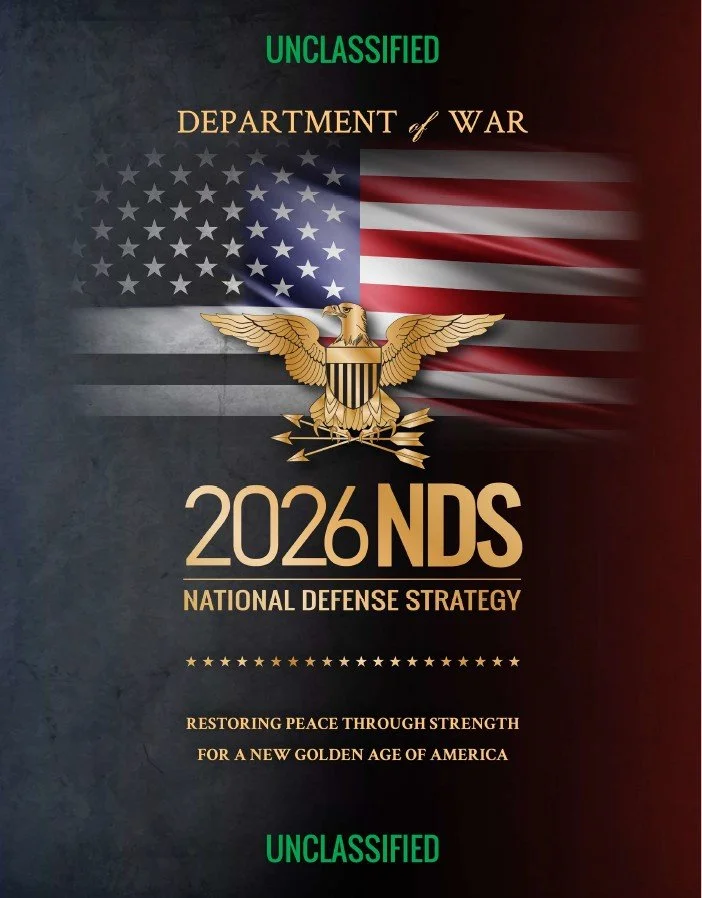
For policy analyts and decisionmakers in the Indo‑Pacific, the key takeaway from the NDS is this:
The U.S. says it will deter China and prevent domination, but it keeps the “when and how hard we will fight” question deliberately open.
The 2026 NDS, coupled with Trump’s declarative speech at Davos, signals that the fundamental threshold problem, the “when and how hard we will fight”, is not resolved; instead, we now observe official posture of “structured Indo-Pacific ambiguity”.
For policy analyts and decisionmakers the threshold question therefore remains unanswered:
Under what specific conditions would the United States actually move from signalling and presence to using military force in the Indo‑Pacific – and how big that effort would be?
What the NDS says:
The NDS now makes defending the homeland the top priority and deterring China in the Indo‑Pacific “through strength, not confrontation” secondary.
It says the goal is to prevent China from dominating the US or its allies, but stresses a “just peace” that is “acceptable to China” and explicitly rejects any “existential struggle” or regime‑change logic.
It states that as U.S. forces focus on the homeland and the Indo‑Pacific, allies elsewhere take primary responsibility for their own defence, with “essential but more limited” U.S. backing.
What the NDS does not say:
It does not spell out red lines (e.g. what exact actions by China in Taiwan, the South China Sea, or against an ally would trigger U.S. combat involvement). Taiwan is not named in the NDS at all.
It does not clarify the scale and speed of U.S. intervention in an Indo‑Pacific contingency; “deter China” and “prevent dominance” are broad aims, not operational thresholds.
Clarity vs Ambiguity
The U.S. now clearly says what it wants to avoid (a big war with China, global overextension): it says it will deter and limit China.
But the US omits to define exactly when and how it will actually fight in the Indo‑Pacific thus leaving allies and adversaries guessing about that threshold.
Three Ambiguities Remain
Analyitically, after the release of the 2026 NDS and Trump’s Davos speech, three unresolved ambiguities remain:
Trigger ambiguity: What Chinese (or other) actions would cross the line from “pressure we live with” to “we fight” – e.g. gray‑zone coercion, blockade, limited strike, full‑scale invasion. The 2026 NDS talks about deterring China and preventing domination but does not spell out those triggers, and it doesn’t even name Taiwan, which keeps that line deliberately vague.
Scale ambiguity: If the threshold is crossed, does U.S. engagement mean a symbolic show of force, an enabling role behind allies, or a decisive fight to restore the status quo? The NDS prioritises homeland defence and says support to allies will be “more limited,” but never defines what level of Indo‑Pacific contingency would justify a major U.S. commitment.
Conditionality ambiguity: Is U.S. willingness to cross that threshold conditional on what allies have done – defence spending, access, burden‑sharing – or is it truly treaty‑based and non‑negotiable? The strategy makes ally self‑reliance and burden‑sharing central, but it stops short of saying “if you don’t do X, we won’t come.”
What the 2026 NDS says on China
China is to be deterred in the Indo‑Pacific “through strength, not confrontation.”
The goal is “to prevent anyone, including China, from being able to dominate us or our allies” and to maintain a “favorable balance of power” in the Indo‑Pacific.
It stresses “respectful relations” and says the aim is not to dominate, strangle, or humiliate China, but to set conditions for a “stable peace.”
It prioritises defending the homeland and Western Hemisphere first, then deterring China, and says allies elsewhere will bear “primary responsibility” with only “essential but more limited” U.S. backing.
2026 NDS and the 2025 NSS Compared
The NDS makes the 2025 NSS more concrete, more relativised, and more conditional in ways the NSS only implied.
1. It turns NSS intent into a clear priority stack.
The 2025 NSS reorients US strategy toward:
Western Hemisphere dominance and border security
Economic power, industrial capacity and tariffs as core security tools
A narrower focus on “core, vital national interests.”
The 2026 NDS spells out how Defense will execute that, in a simple four‑point hierarchy:
Defend the US homeland
Deter China in the Indo‑Pacific “through strength, not confrontation”
Increase burden‑sharing with allies and partners
“Supercharge” the US defence industrial base.
So the NDS reveals the actual ordering of effort and resources that was only implicit in the NSS.
2. It openly downgrades China and upgrades ally burden.
The NSS casts China as a central challenge, but within a broader America‑first economic and hemispheric frame; it leaves some ambiguity over whether China is still the “top threat.”
The NDS makes two clarifications:
It explicitly does not list China as the foremost strategic threat, talking instead about preventing any one state from dominating the US or its allies, and stressing it will not try to “strangle or humiliate” China.
It states plainly that allies must assume primary responsibility for their own defence, with the US providing “more limited” support as it focuses on the homeland and deterring China.
That combination – a softer tone on China plus a harder line on allies – is much clearer in the NDS than in the NSS.
3. It exposes the scale of retrenchment the NSS hinted at.
The NSS talks about correcting “global overreach,” avoiding “forever wars,” and focusing on the Western Hemisphere, but it remains at the level of vision and narrative.
The NDS reveals what that actually means in practice:
Europe is told to handle its own conventional defence against Russia; the US role is back‑up, not backbone.
Asian allies (notably South Korea) are expected to lead in deterring regional threats, with the US in a supporting, not always lead, role.
Taiwan is not mentioned at all, signalling a conscious decision to avoid binding Defence to specific Indo‑Pacific red lines, even while the NSS talks broadly about preventing Chinese domination.
Implications
The new 2026 National Defense Strategy (NDS) sharpens and operationalises the 2025 National Security Strategy (NSS), in three important ways for the Indo‑Pacific.
The NDS can be seen as the implementation manual for the NSS’s narrative of restraint, codifying that allies should not assume the previous level of automatic U.S. military backing, even if formal commitments remain on paper.
The NDS takes the NSS’s softer, more transactional framing of China and introduces planning assumptions—China is serious, but the U.S. will live with spheres of influence and focus on avoiding a big war rather than preserving every aspect of the old order.
Where the 2025 NSS defined how Trump’s team thinks about the world, the 2026 NDS tells us where they are prepared to accept risk—and that includes a more contingent U.S. role in the Indo‑Pacific, consistent with the Davos speech and the broader America‑first, hemisphere‑first narrative.
In practice this means harder questions for Indo‑Pacific allies about capabilities, host‑nation support, and what they will do if U.S. forces are tied down or held back.