

Emerging Leaders Forum
Master the Strategy of the Indo-Pacific
Eight sessions. Plus Two Policy Writing Masterclasses. One semester. A career-defining perspective.
IPSC Foundation Scholarships available — see below
The Indo-Pacific is the global center of gravity for strategic competition, economic innovation, and geopolitical risk. To lead in this environment, you need more than just theory — you need the tools to navigate a multipolar world from the perspectives of the people who live in it.
The IPSC Emerging Leaders Forum is an 8-session, cohort-based professional program designed for the next generation of strategic thinkers.
Indo-Pacific Lens
Regional strategy from within the Indo-Pacific — prioritising the perspectives of ASEAN, Japan, Korea, India, Australia, and the Pacific Islands.
Real Policy Outputs
Graduate with a professional 800-word commentary and a published-ready 1,500-word Capstone Policy Brief you can use immediately in your career.
Accessible & Rigorous
No IR background required. Scholarships available. The IPSC Leaders Forum is designed as a growth experience — skills are built through participation, not prerequisites for joining.
Why Choose the Emerging Leaders Forum?
A Unique Strategic Lens
Move beyond Western-centric frameworks. Our curriculum is authored from within the Indo-Pacific, prioritizing the strategic perspectives of ASEAN, Japan, Korea, India, Australia, and the Pacific Islands — including the voices and realities of smaller states too often absent from elite policy conversations.
Professional Policy Deliverables
You won't just learn; you will produce. Every participant graduates with a professional 800-word commentary and a 1,500-word Capstone Policy Brief — practical outputs you can use immediately in your career, regardless of your sector or starting point.
Skills You Build Here, Not Skills You Need to Bring
IPSC Leaders Forum is designed as a growth experience. The analytical frameworks, policy writing techniques, and regional knowledge covered in the program are developed through your participation — not prerequisites for joining.
Bridging the Professional Gap
IPSC Leaders Forum is the "whitespace" in the market — offering the depth of elite fellowships with the accessibility and practical focus required by modern practitioners, at a price point that reflects our commitment to inclusion.
Collaborative Cohort Learning
Engage in high-level debate with a diverse cohort of peers — from emerging scholars and community practitioners to corporate advisors — all committed to understanding regional deterrence, economic statecraft, and security dynamics through a shared regional lens.
A Credential and a Community
Participants who complete the programme receive the IPSC Certificate in the Emerging Leaders Forum — a recognised signal of analytical capability and regional expertise valued by employers, institutions, and collaborators. Alumni join a growing community of practitioners, analysts, and emerging leaders across the Indo-Pacific whose connections extend well beyond the final session.
The 8-Session Programme + Bonus Masterclass
From macro-geopolitical theory to real-world policy application.
Foundations of Strategic Competition
Explore the core analytical frameworks for understanding great power rivalry and the shift toward a multipolar regional system — no prior knowledge assumed.
Regional Security Architecture
Analyze the interplay between ASEAN centrality and minilateral groupings like the Quad and AUKUS, focusing on maritime security flashpoints and what they mean for the region's people.
Open Forum: Indo-Pacific in Focus
A member-led discussion on current Indo-Pacific events and emerging IPSC research. Participants explore live policy developments, debate their implications, and practise the kind of structured analysis demanded of leaders in the field.
Economic Statecraft & Coercion
Evaluate the intersection of trade and national security, including supply chain vulnerabilities and geoeconomic strategies affecting Indo-Pacific communities.
Emerging Geopolitical Risks
Navigate non-traditional threats — from climate security and demographic shifts to the impact of AI and digital technologies on modern statecraft — with particular attention to their effects on smaller and developing Indo-Pacific states.
Policy Writing Masterclass – Part 1
Learn how effective policy briefs are structured, how to deploy evidence persuasively, and how to write with clarity for non-specialist decision-makers. Participants leave with a framework and a draft outline ready for peer review.
Policy Writing Masterclass – Part 2
Build on Part 1 with advanced drafting techniques, peer critique sessions, and direct faculty feedback. Participants refine their policy brief to a publication-ready standard.
Policy Process & Governance
Deconstruct how foreign policy is actually made and executed, preparing you to navigate institutional environments and engage effectively with diverse regional stakeholders.
Applied Policy Writing & Capstone
Finalize your Capstone Brief through intensive peer and faculty review — building on the Policy Writing Masterclass — and translate your complex analysis into clear, actionable insights for real decision-makers.
Explore the core analytical frameworks for understanding great power rivalry and the shift toward a multipolar regional system — no prior knowledge assumed.
Analyze the interplay between ASEAN centrality and minilateral groupings like the Quad and AUKUS, focusing on maritime security flashpoints and what they mean for the region's people.
A member-led discussion on current Indo-Pacific events and emerging IPSC research. Participants explore live policy developments, debate their implications, and practise the kind of structured analysis demanded of leaders in the field.
Evaluate the intersection of trade and national security, including supply chain vulnerabilities and geoeconomic strategies affecting Indo-Pacific communities.
Navigate non-traditional threats — from climate security and demographic shifts to the impact of AI and digital technologies on modern statecraft — with particular attention to their effects on smaller and developing Indo-Pacific states.
Learn how effective policy briefs are structured, how to deploy evidence persuasively, and how to write with clarity for non-specialist decision-makers. Participants leave with a framework and a draft outline ready for peer review.
Build on Part 1 with advanced drafting techniques, peer critique sessions, and direct faculty feedback. Participants refine their policy brief to a publication-ready standard.
Deconstruct how foreign policy is actually made and executed, preparing you to navigate institutional environments and engage effectively with diverse regional stakeholders.
Finalize your Capstone Brief through intensive peer and faculty review — building on the Policy Writing Masterclass — and translate your complex analysis into clear, actionable insights for real decision-makers.
Who Is the Forum For?
The IPSC Emerging Leaders Forum is for anyone ready to engage seriously with the Indo-Pacific — we especially encourage applications from those whose voices are underrepresented in strategic policy spaces.
Undergraduates & Recent Graduates
Students in International Relations, Law, Business, Economics, or any discipline who want a practical professional portfolio and a rigorous introduction to regional policy — regardless of whether your university has a dedicated IR program.
Early-to-Mid Career Professionals
Practitioners in government, corporate risk, the non-profit sector, community organisations, or development agencies who need to translate geopolitical trends into actionable strategy relevant to their work.
Regional Practitioners & Emerging Voices
Those working on the ground across the Indo-Pacific — including in Pacific Island nations, Southeast Asia, and South Asia — whose lived regional experience is a core asset to the cohort, not a substitute for formal credentials.
Strategic Changemakers
Anyone dedicated to fostering a deeper, more inclusive understanding of regional dynamics — through local lenses, community knowledge, and a commitment to policy that reflects the diversity of the Indo-Pacific itself.
"Not sure if IPSC Emerging Leaders Forum is right for you? We encourage you to apply. Past cohorts have included first-generation graduates, practitioners without formal IR training, and participants from across the Indo-Pacific who went on to careers in government, think tanks, and international organisations."
Faculty & Program Leaders
IPSC Emerging Leaders sessions are led by practitioners and researchers with deep regional expertise — professionals who have worked at the intersection of policy, strategy, and the Indo-Pacific.

Professor Carlyle A. Thayer is Emeritus Professor of Politics at UNSW Canberra and Director of Thayer Consultancy. One of the leading specialists on Southeast Asian security and politics, his work focuses on regional strategic dynamics, defence cooperation, and the influence of major powers on Southeast Asia’s evolving security architecture.
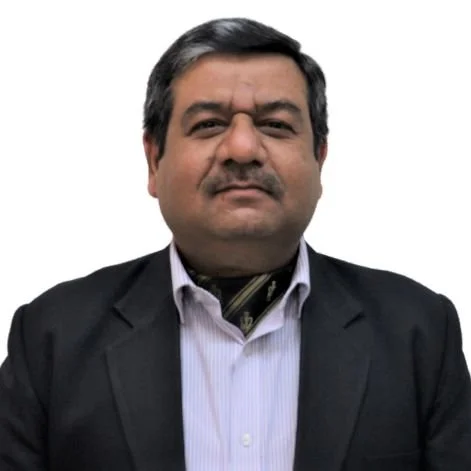
Retired Indian Navy Captain, maritime doctrine expert, lawfare researcher, former Executive Director at National Maritime Foundation. Indo-Pacific strategy specialist.

Dr Divya Anand is Associate Dean (UG Program) and Assistant Professor at IILM, Lodhi Road, New Delhi. She previously served as Assistant Professor at Amity University, Noida. She holds an M.Phil. and PhD from the School of International Studies, Jawaharlal Nehru University. Her expertise includes South Asian affairs, Indian foreign policy, security, terrorism and counterterrorism, and Indo-Pacific strategic developments. She has published in respected national and international journals.

Rear Admiral Roye is the former Gujarat Naval Area Commander, Indian Navy, and currently Senior Advisor with Alvarez & Marsal, bringing deep expertise in maritime security, nuclear strategy, and ESG governance to the program.

Natalie is a defence and deterrence specialist focused on Indo-Pacific security. She is a Senior Fellow at the Indo-Pacific Studies Center and a Senior Analyst at the National Institute for Deterrence Studies, with expertise in military capability and U.S. extended nuclear deterrence. She co-hosts Deterrence Down Under and holds a Master of Strategic Studies and an MBA from the Australian National University, and a Master of Engineering Management and Bachelor of Science (Applied Chemistry) from UTS.

Works at the intersection of international trade, economic diplomacy, and security, connecting Germany and the EU with partners across Asia amid global geopolitical and economic shifts. As Country Manager Asia at the Stuttgart Region Chamber of Commerce, Verena advises companies on market entry, expansion, and strategy in Asia, with a focus on India, Japan, Korea, and China.

A Republic of Korea Army officer (Retd), Captain James JB Park brings operational and strategic expertise in alliance coordination and Indo-Pacific security. He is a 2024 Non-Resident James A. Kelly Korea Studies Fellow. His analysis has been published in The Diplomat and Asia Times. He is a Young Leader at Pacific Forum and a NextGen member of the Royal United Services Institute (RUSI). He holds a BA in Politics from New York University and is pursuing an MA at Columbia University. Profile image withheld in line with institutional requirements.
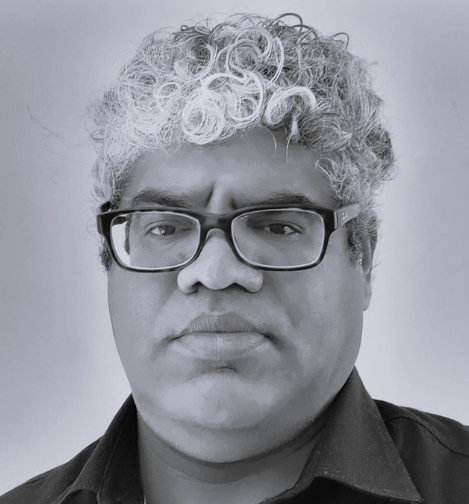
Professor Pradeep Nair is Director of Research and Professor of New Media Studies at the Central University of Himachal Pradesh, India. A Senior Research Fellow with the Earth System Governance Project at Uppsala University, he is an expert member of the Global Nitrogen Governance Working Group under the International Nitrogen Network (NSF-funded). His work focuses on coastal sustainability, climate change, and ecosystem restoration through mitigation, adaptation, and nature-based solutions. He is affiliated with UNEP and the UNFCCC as a climate expert, and is a Fellow of the Royal Asiatic Society and the Royal Geographical Society (London).

Dr Arbenita Sopaj is a Non-Resident Fellow at IPSC and an affiliated scholar at the Research Institute for Indo-Pacific Affairs, Kobe. She serves on the board of the Global Peacebuilding Association of Japan and with the Academic Council of the United Nations (Tokyo). Her work examines U.S.–Japan strategy, East Asia security, and Balkan diplomacy.