

India–Japan Vision Plan: Building a New Pillar in the Indo-Pacific
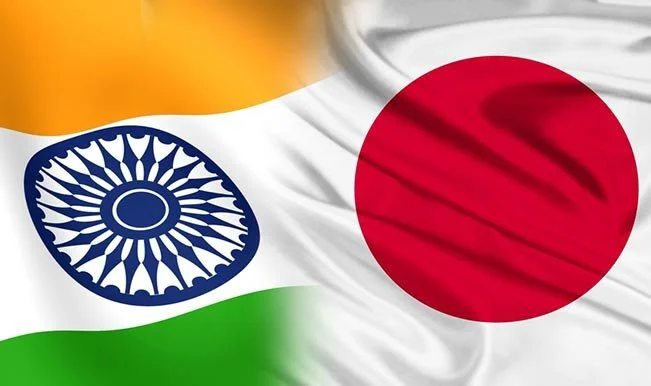
In Tokyo this August, Prime Minister Narendra Modi of India and his Japanese counterpart, Shigeru Ishiba, unveiled a vision plan that could mark a turning point in India–Japan relations and Indo-Pacific strategy. At its core is a bold economic commitment: Japan will mobilize ¥10 trillion (about $68 billion) of private investment in India over the next decade. Alongside this, the two governments launched an Economic Security Initiative and signed a Joint Declaration on Security Cooperation, tying long-term financial flows to defense, technology, and supply-chain resilience.
Economic security at the core
What makes the Vision Plan stand out is its clarity. Unlike many summit declarations, it sets out measurable targets and spells out which sectors matter most. Japan’s investment is expected to flow into industries such as semiconductors, artificial intelligence, clean energy, digital infrastructure, and space cooperation. At the same time, the two countries have created an Economic Security Initiative that is meant to shore up supply chains in vulnerable areas like telecom and pharmaceuticals, cutting the risks that come from depending too heavily on a single source.
With global supply chains disrupted by trade disputes and tariffs, particularly between the U.S. and China, Tokyo sees India as a trusted partner to diversify risks. For New Delhi, this investment enhances its ambition to become a high-technology hub while reducing reliance on China in sensitive sectors. PM Modi’s visit is also seen as a strategic move to strengthen ties, both diplomatic and economic, amid US tariffs on the local industries.
Linking economics and defence
The Vision Plan deliberately connects economic cooperation with defense and security commitments. The Joint Declaration covers defense-industrial collaboration, cyber security, and maritime safety. The leaders also pledged to enhance interoperability and explore co-development and joint R&D in high-technology areas. By making defense a core part of the economic roadmap, the plan creates a structure in which disruptions in one area are tied to consequences in another, strengthening resilience against external shocks.
Deliverables and people-to-people ties
Beyond economics and defence, the Vision Plan announced tangible projects. These include continued work on the Mumbai–Ahmedabad high-speed rail project, expanded cooperation between ISRO and JAXA on future space missions, and a human-resource exchange framework. Notably, the leaders set a target of 500,000 people-to-people exchanges over five years, including the entry of 50,000 skilled Indian workers into Japan. Such deliverables signal an intent to embed the partnership in society as well as in government-to-government agreements, highlighted during Modi’s Tokyo summit visit.
Opportunities and constraints
The Vision Plan is ambitious, but its success will depend on execution. Analysts and journalists note that past India–Japan projects, including infrastructure ventures, have often faced regulatory hurdles, bureaucratic delays, and corporate caution. Japan’s aging population and fiscal pressures also constrain how quickly private firms can scale outward investment. At the same time, China’s entrenched role in South Asia through ports and infrastructure projects remains a competitive challenge to the influence New Delhi and Tokyo hope to build, as also noted by Indian Express. However, by pairing economic commitments with security cooperation, the Vision Plan strengthens the idea of a “free, open, and rules-based Indo-Pacific.” It also aims to reinforce the Quad’s credibility by delivering concrete initiatives rather than relying solely on military exercises or rhetorical statements, especially after US fallout under Trump administration.
The Vision Plan will be judged by results. Three benchmarks will be decisive:
1. Private-sector action—Will Japanese firms sign joint ventures in industries like semiconductors, EV batteries, and shipbuilding?
2. Policy follow-through in India—Will reforms in visas, land use, and export controls make collaboration practical?
3. Defense co-development—Will joint R&D and technology transfer projects materialize beyond memoranda?
In conclusion, we can say that the India–Japan Vision Plan is notable for its concreteness. With specific targets, sectoral focus, and human-resource goals, it offers a testable framework for bilateral cooperation. For India, it provides technology and investment without compromising strategic autonomy. For Japan, it secures a like-minded partner with scale and regional influence. If promises translate into projects, the plan could stand as one of the most credible Indo-Pacific initiatives of 2025.
References:
1. https://www.hindustantimes.com/india-news/at-meeting-with-modi-japan-says-it-will-invest-68-billion-in-india-over-10-yrs-101756478272707.html
2. https://www.reuters.com/world/india/japan-india-deepen-security-economic-ties-amid-us-tariffs-2025-08-29/
3. https://timesofindia.indiatimes.com/india/ai-semiconductors-more-india-japan-outline-roadmap-key-outcomes-of-pm-modis-two-day-visit/articleshow/123596178.cms
4. https://www.reuters.com/world/china/modi-seeks-closer-ties-asia-tour-offset-fallout-us-tariffs-2025-08-28/
5. https://ddnews.gov.in/en/defense-technology-maritime-security-at-core-of-india-japans-new-security-pact/
6. https://indianexpress.com/article/explained/overview-of-india-japan-relationship-pm-modi-10217535/